Discover Plasencia: History, Culture and Flavour in the Heart of Extremadura
If you are looking for hotels in Plasencia, this city in the province of Cáceres, known as the City of the Two Cathedrals, is one of the most fascinating stops along the Silver Route (Vía de la Plata). Finding accommodation in Plasencia means staying just a short walk from a walled historic centre, two interconnected cathedrals, and a Main Square that transforms into a medieval-style marketplace every week. If you are still wondering where to stay in Plasencia, this guide will tell you what to see, when to visit, and what you can expect during your stay at B&B HOTEL Plasencia.
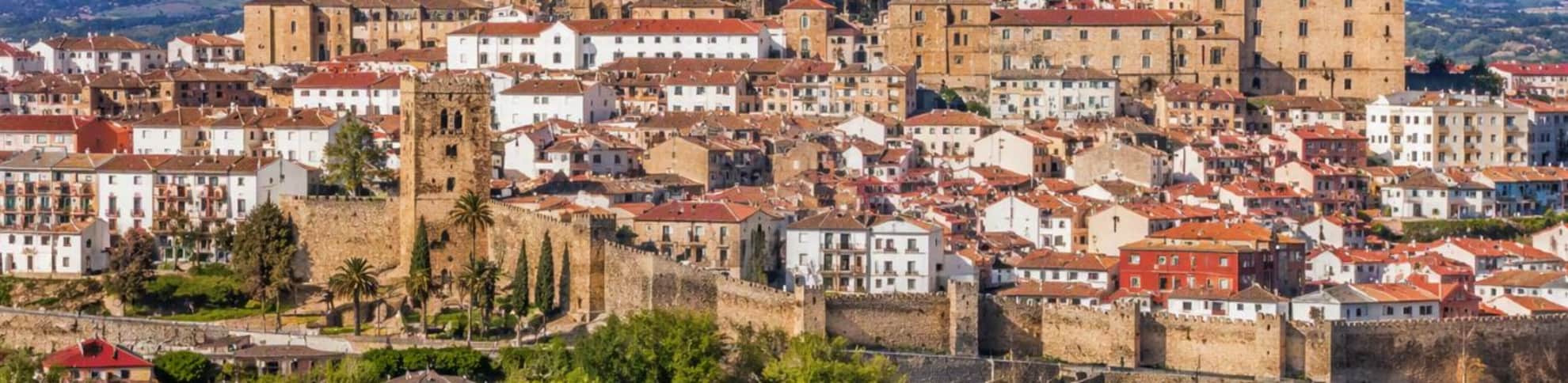
Plasencia owes much of its current layout to the walls and gates commissioned by King Alfonso VIII in the 12th century, which still stand along much of the perimeter of the old town. This medieval heritage is complemented by a unique architectural ensemble in Extremadura: the Old Cathedral, built in Romanesque and Gothic styles, and the New Cathedral, featuring Gothic and Renaissance architecture. The two stand side by side and are connected to one another. The city is also the natural gateway to the Jerte Valley and the La Vera region, and it has preserved a centuries-old commercial tradition that fills the Main Square every week with market stalls, crafts and a vibrant atmosphere.
What to See in Plasencia
Plasencia’s historic centre is best explored on foot, with its two cathedrals, the Main Square and many noble palaces located within the city walls. It is a city that rewards a leisurely stroll, as every street in the old town reveals a palace, church or section of the medieval walls worth stopping to admire.
Outside the walled enclosure, the Jerte River offers a different side of the city, with parks and green spaces where visitors can combine cultural sightseeing with a more relaxed walk.
Recommended Areas to Explore (and to Help You Decide Where to Stay in Plasencia)
- Historic Old Town within the Walls: Home to the cathedrals, the Main Square and most of the city’s palaces, ideal for exploring on foot.
- The Walls and Medieval Gates Area: Perfect for those who enjoy leisurely walks around the medieval perimeter.
- Jerte Riverbank: The city’s green area, featuring parks where you can unwind between visits.
- Main Square Surroundings: The liveliest area, especially on market Tuesdays.
Must-See Attractions in Plasencia
- Old Cathedral and New Cathedral: Two connected cathedrals within a single complex, Romanesque-Gothic and Gothic-Renaissance respectively, including a cathedral museum.
- Main Square (Plaza Mayor): The heart of the city and the venue for the famous Martes Mayor market.
- Medieval Walls and Gates: The fortified enclosure ordered by Alfonso VIII in the 12th century, with several original gates still preserved.
- Aqueduct: A historic structure that once supplied water to the city.
- Mirabel Palace: A Renaissance palace now housing a hunting collection.
- Monroy Palace: Also known as the Palace of the Two Towers, one of the most recognisable civil buildings in the historic centre.
- Episcopal Palace: A fine example of Renaissance architecture connected to the city’s episcopal history.
- Sorolla Viewpoint: One of the viewpoints depicted by painter Joaquín Sorolla as a symbol of Extremadura.
- Parque de la Isla and Parque de los Pinos: The city’s main green spaces along the Jerte River.
- Ethnographic and Textile Museum: Dedicated to the region’s textile traditions and everyday life.
Events and Festivals in Plasencia
Throughout the year, Plasencia hosts several events that form part of its identity, ranging from centuries-old markets to religious celebrations recognised for their cultural significance.
- San Fulgencio Festival (January): Celebration of the city’s patron saint, featuring tastings of Extremaduran migas, local wines, traditional pastries and folk music in the streets.
- Holy Week (Spring): Declared a Festival of Regional Tourist Interest, with processions through the historic centre.
- Plasencia Fair (June): Fairgrounds, market stalls and a festive atmosphere throughout the city.
- Martes Mayor (August): A traditional artisan market with centuries of history, declared a Festival of Regional Tourist Interest, featuring stalls, entertainment and music throughout the old town.
- Folk Festival (August): A folk music festival held near Torre Lucía, with the city walls providing a spectacular backdrop.
- Tapas Fair (Autumn): Local bars and restaurants compete by showcasing their finest tapas.
Traditional Cuisine of Plasencia
Plasencia’s cuisine draws on the rich culinary traditions of Extremadura as well as the nearby Jerte Valley and La Vera regions, featuring simple dishes made with high-quality local products.
- Sopas Cañas: A traditional soup made with bread, garlic and milk, especially popular during the colder months.
- Plasencia-Style Green Beans: One of the city’s most representative traditional dishes.
- Pickled Potatoes: A traditional side dish deeply rooted in local cuisine.
- Extremaduran Migas: A breadcrumb-based dish that takes centre stage during celebrations such as San Fulgencio.
- Torta del Casar: A Protected Designation of Origin cheese produced in the region.
- Pimentón de la Vera (Protected Designation of Origin): The paprika that gives much of Extremaduran cuisine its distinctive flavour.
- Pitarra Wine: A traditional local wine that commonly accompanies meals in Plasencia.











 account